

There is a distinct thrill in watching a giant boulder roll toward you while you clutch a handful of ancient artifacts, calculating if you have enough stamina to outrun the trap. This specific adrenaline rush is what defines The Adventurers genre, whether you are rolling dice on a tabletop, exploring lore in a theme park, or managing inventory on a digital screen.
While many people dive into these experiences blindly, hoping for the best, the difference between escaping with the treasure and becoming a permanent fixture of the temple often comes down to preparation and understanding the mechanics behind the chaos. This guide breaks down how to navigate these treacherous environments, ensuring you walk away with the prize rather than just a story of how you almost made it.
Understanding The Adventurers
Before diving into the specific mechanics and rules, it is essential to grasp what makes this franchise tick. It combines historical pulp themes with ruthless efficiency, creating a unique loop where every decision carries weight and every mistake has immediate consequences for the player.
Overview of The Adventurers
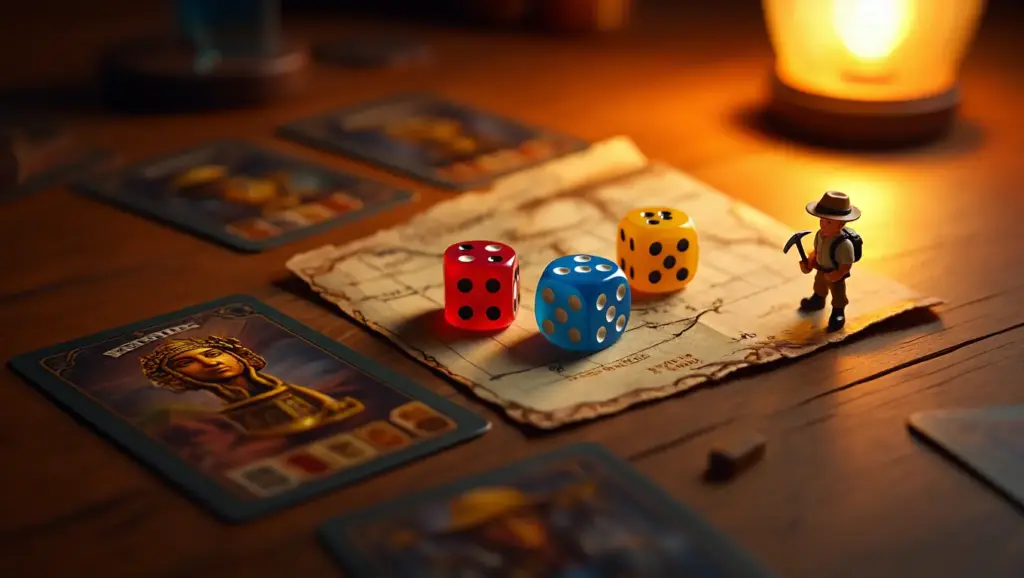
At its core, the concept we are exploring centers on the high-stakes atmosphere of 1930s pulp exploration, most famously realized in the board game The Adventurers: The Temple of Chac and its sequel, The Pyramid of Horus. The title forces players to balance greed against survival. You take on the role of an explorer infiltrating a dangerous ruin. The goal is simple: grab as much loot as possible and get out before the walls close in or the rock crushes you.
However, it is not just about rolling cubes. It is a resource management puzzle wrapped in a cinematic theme. Participants must decide how many treasure cards to draw. Taking too many items weighs the character down, reducing the number of dice available for movement. This “push your luck” mechanic creates genuine tension. You have to constantly ask yourself if that extra golden idol is worth the risk of traveling slower when the ceiling is literally falling.
History and Evolution of The Adventurers
The franchise traces its roots back to the creative minds of Guillaume Blossier and Frédéric Henry. Published by Fantasy Flight Games (FFG), the series captured the imagination of gamers who wanted an Indiana Jones experience without the official license. The first installment, The Temple of Chac, established the formula: physical components like the rolling stone and the moving walls added a tactile urgency that few titles at the time could match.
Over time, the design philosophy shifted slightly. The release of The Pyramid of Horus introduced different dangers—mummies and falling blocks—but kept the core DNA intact. The evolution of the system mirrors the broader trend in thematic tabletop hobbies, moving from abstract mechanics to immersive, narrative-driven sessions where the board itself acts as the antagonist.
Key Features and Gameplay
The defining feature of this system is the “Load Level.” Every relic has a weight. As your avatar collects more goods, their encumbrance increases. This burden directly correlates to the number of actions or speed potential available to them.
The Hazard System
Beyond the inventory management, the environmental hazards are the true stars.
- The Boulder: In the temple, a physical ball travels down the track. If you are in its path, you are eliminated.
- The Lava: Tiles flip over to reveal molten rock, effectively shrinking the play area turn by turn.
- The Walls: In the crushing room, the partitions physically move closer together, limiting the time you have to decipher glyphs.
Character Abilities
Each persona comes with a unique skill that breaks the standard regulations. Some can carry more mass without penalty, while others can sprint or swim faster. Knowing when to trigger these talents is often the difference between life and death.
Never prioritize potential wealth over guaranteed movement unless you are within one turn of the exit. The mathematical probability of rolling high on fewer dice is always lower than the certainty of having more dice to roll.

Exploring The Adventurers on BoardGameGeek (BGG)
No game exists in a vacuum, and for this title, the lifeline is found online. BoardGameGeek (BGG) provides the essential infrastructure for fans to connect, share modifications, and keep the spirit of the expedition alive long after the box has been shelved.
Introduction to The Adventurers BGG Community
When you land on The Adventurers BGG page, you are entering a hub of dedicated enthusiasts who have dissected every probability curve in the system. BoardGameGeek serves as the central nervous system for hobbyists, and the listing for this product is a treasure trove of files, player aids, and rule clarifications. It is not just a database entry; it is where the legacy lives on despite being out of print.
The community on The Adventurers BGG is surprisingly active for a title of its age. You will find threads discussing house regulations to mitigate bad luck, painting guides for the miniatures, and forums where users trade hard-to-find expansions. For anyone serious about mastering the challenge, this website is the first stop.
Popular Reviews and Ratings
Navigating the reviews on The Adventurers BGG reveals a polarized but passionate audience. The aggregate rating generally hovers in the “good” range, often praised for its theme but criticized for its high randomness factor.
- The Positive Consensus: Most favorable comments on The Adventurers BGG highlight the “laugh-out-loud” moments. Users love the tactile nature of the rock crushing a friend’s miniature. It is viewed as a “beer and pretzels” activity—light on strategy, heavy on fun.
- The Critical View: Negative feedback found via The Adventurers BGG usually centers on player elimination. In modern game design, losing a character early and watching others continue for an hour is a faux pas.
According toSocial interaction, communicative behaviors and flow experience in tabletop gaming, the researchers report that social interaction can influence game enjoyment and flow—helping explain why strongly thematic, socially “loud” games can stay beloved even when the systems are a bit swingy (2009, ACM).
Strategies and Tips from BGG Users
If you dig deep into the forums of The Adventurers BGG, you find that winning isn’t just about chance. Veteran explorers have shared specific approaches to mitigate the chaos.
The “Sprint and Snatch” Method
A common strategy discussed on The Adventurers BGG involves rushing the first half of the ruin. By ignoring the low-value loot in the early zones, you conserve health and cards for the high-value areas near the end.
Managing the Deck
Another tip frequently cited on The Adventurers BGG is card counting. Since the treasure stack is finite, knowing which high-value items have already been drawn allows you to calculate the expected value of your next attempt.
Utilizing Player Aids
The files section of The Adventurers BGG contains user-created reference sheets. These are essential for new participants, as they clarify the icon language that can sometimes be confusing on the original components.
Painting the Minis
If you want to see how the boulder pressure and “push-your-luck” pacing actually feel at the table, this review breaks down the core loop in plain English. Pay attention to how movement tightens once players start overloading on treasure. It’s a helpful visual companion to the BGG discussion.
The Adventurers in Disney Media
The concept of the daring explorer extends far beyond the tabletop. Disney has cultivated this archetype for decades, creating a rich tapestry of stories and attractions that inform the very aesthetic and atmosphere players seek when they roll the dice.
Appearances in Disney Films and Shows
While the board game handles the mechanics of danger, the spirit of exploration is best captured by the Mickey Mouse company counterparts. When people search for The Adventurers Disney, they are often looking for the legendary “Adventurers Club” at Pleasure Island or the broader lore of the S.E.A. (Society of Explorers and Adventurers). This fictional organization connects various attractions across global theme parks, from the Jungle Cruise to Mystic Manor.
The storytelling found in The Adventurers Disney media provides the narrative backbone that gaming sessions try to emulate. The club, though closed, remains a cult phenomenon. It was an interactive theater experience where guests mingled with eccentric explorers, puppets, and talking masks. This level of immersion set the gold standard for themed entertainment.
The Adventurers Disney Merchandise
Collecting items related to The Adventurers Disney lore has become a hobby in itself. The merchandise is not just toys; it is often designed as in-universe artifacts.
- S.E.A. Pins: These are highly covetable badges representing membership in the society.
- Maps and Journals: Replicas of the logs kept by famous fictional travelers.
- Apparel: Clothing that mimics the 1930s expedition gear seen in the attractions.
Fans hunting for The Adventurers Disney gear often have to resort to secondary markets like eBay, as the parks release these items in limited runs. The scarcity mimics the treasure hunting aspect of the stories themselves.
Impact of Disney on The Adventurers Popularity
The cultural footprint of The Adventurers Disney theme cannot be overstated. It keeps the genre alive in the public consciousness.
- Cross-Pollination: Fans of the Jungle Cruise movie often seek out tabletop experiences that capture that same vibe, leading them to titles like The Temple of Chac.
- The S.E.A. Universe: The interconnected backstory of The Adventurers Disney attractions creates a demand for deep lore. Players want to feel like they are part of a larger world.
- Visual Language: The aesthetic established by The Adventurers Disney—khaki shirts, fedoras, ancient glyphs—defines what we expect an expedition story to look like.
When a new user searches for The Adventurers Disney, they are engaging with a specific brand of nostalgia. It is safe, sanitized danger—the thrill of the crash without the actual injury.
“It’s an entire world unto itself, but not yet up and running, so you can wander through it wandering through your imagination.” — Joe Rohde, former Portfolio Creative Executive at Walt Disney Imagineering; Disney Legend (honored in 2024).
To truly enjoy the experience, you must engage with the narrative flavor text and thematic elements as much as the mechanics. A group that roleplays the panic of the collapsing ceiling will always have a better session than a group that simply calculates the math.

The Adventurers on Steam: Digital Adaptation
Modern gaming habits often shift towards convenience, leading many to seek virtual alternatives. Steam offers a gateway to these experiences, providing a different way to engage with the core loops of dungeon crawling without the physical setup.
Introduction to The Adventurers Steam Version
Transitioning from the table to the screen, The Adventurers Steam searches often lead players to a different type of experience. While the official Fantasy Flight product does not have a direct, high-budget standalone adaptation, the term frequently points to indie RPGs or mods within Tabletop Simulator.
The indie title often found via The Adventurers Steam query is a turn-based tactical RPG. It focuses on dungeon crawling and loot management, mirroring the board game’s ethos but with digital calculation. Alternatively, using Tabletop Simulator allows groups to play the original design virtually, which became crucial for maintaining playgroups during recent years.
Gameplay Differences in Digital Format
When playing The Adventurers Steam versions (specifically via simulation software), the tactile loss is the biggest shift. You cannot physically feel the weight of the cubes.
- Automation: In digital RPG versions found under The Adventurers Steam, math is handled by the CPU. You don’t forget to subtract movement points for load; the computer does it for you.
- Pacing: Digital play is generally faster. There is no setup time, and shuffling decks is instantaneous.
- Atmosphere: While the cardboard equivalent relies on table talk, The Adventurers Steam experience often relies on sound design and lighting effects to build tension.
User Reviews and Feedback on Steam
The feedback for titles falling under The Adventurers Steam umbrella varies based on the specific application.
- For the Indie RPG: Reviews on The Adventurers Steam page often praise the retro feel but criticize clunky UI. Players appreciate the “old school” difficulty.
- For Simulator Mods: Users searching for The Adventurers Steam workshop mods rate the high-quality scans of the original components very highly. The physics engine allows for the boulder to actually roll, which preserves the gimmick.
- Community Wishlist: A recurring comment in The Adventurers Steam forums is the desire for a fully licensed, high-production-value port of Temple of Chac, similar to how Ticket to Ride was adapted.
In a 2021 survey of 45 Tabletop Simulator–based designers and publishers, 91% said Tabletop Simulator played a crucial role in rolling out their games during the pandemic—one signal of how virtual tabletops became a practical “training ground” and bridge for in-person play (2021, Tabletop Simulator).

Comparing The Adventurers Across Different Platforms
With multiple ways to experience the thrill of the hunt, choosing the right medium can be difficult. Each platform offers distinct advantages, from the tactile joy of moving miniatures to the immersive storytelling found in theme parks or the calculation speed of a computer.
Board Game vs. Digital Experience
Choosing between the physical box and the digital equivalents depends on what you value more: social chaos or strategic precision. The plastic-and-cardboard version is a party event. It is about shouting when the trap triggers. The PC iteration is often a solitary or remote puzzle.
Pros and Cons of Each Platform
Here is a breakdown of how the experience shifts depending on where you play.
| Feature | Board Game (Physical) | Disney Media (Lore/Theme) | Steam (Digital/Tabletop Sim) |
| Tactility | High (Minis, cards, rolling ball) | N/A (Passive consumption) | Low (Mouse clicks, physics engine) |
| Social Aspect | Intense, face-to-face interaction | Community bonding, shared fandom | Voice chat, remote connection |
| Setup Time | High (15-20 minutes) | N/A | Instant to Low |
| Cost | High (OOP, secondary market) | Variable (Merch, park tickets) | Low (Indie games or Mods) |
| Immersion | Player-driven | World-class storytelling | Audio-visual driven |
The PC iteration is often a solitary or remote puzzle, ideal for those who have optimized their comfortable gaming setup to handle long strategic sessions without physical fatigue.
Which Version is Right for You?
If you have a group of friends who enjoy loud, rowdy nights with beer and snacks, the physical product is the clear winner. The flaws in the rules are masked by the laughter. However, if you are a solo player who loves the concept of dungeon delving and inventory management, looking into the RPGs on Steam is a better use of your time. For those who care more about the story and the aesthetic than the gameplay, diving into the S.E.A. wiki and merchandise is the most satisfying path.
Tips and Strategies for New Adventurers
Survival in these ruins requires more than just good fortune; it demands a tactical mindset. By learning from the mistakes of those who came before, you can transform from a novice victim into a master treasure hunter who knows exactly when to run.
Getting Started: Beginner Strategies
If you are sitting down to play the board game for the first time, you need a plan. Flailing blindly will get your character crushed.
The “Safe Exit” Protocol
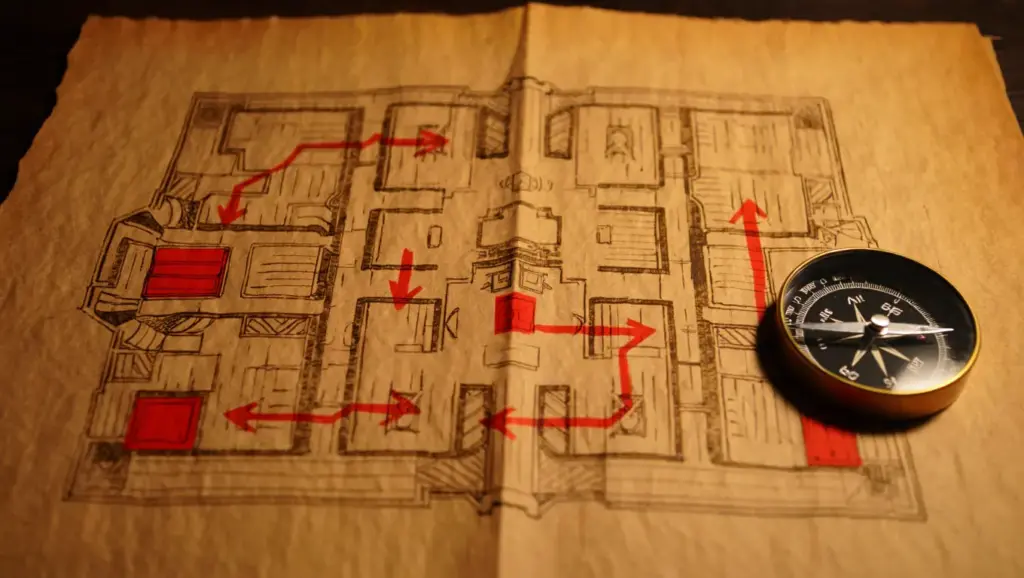
- Survey the Board: Before the first turn, look at the layout. Identify the “Alcoves”—these are safe spots where the boulder cannot hit you.
- Calculate the Distance: Count the exact number of squares to the first protection zone.
- Check Your Load: Ensure your starting card draw does not reduce your movement dice below 3. If it does, discard a low-value item immediately.
- Move First, Loot Later: Spend your first action traveling. Only search for treasure if you have leftover action points.
- Watch the Person Behind You: Never end your turn directly in front of another participant if the walls are closing; they might block you or push past you, leaving you trapped.
Advanced Tips for Experienced Players
Once you understand the flow, you can start manipulating the session. The adventurers who win consistently are those who memorize the deck. There are a limited number of high-value treasures. If two “5-value” idols have already appeared, the statistical likelihood of the next card being valuable drops. Adjust your risk accordingly.
Another advanced tactic is “boulder baiting.” If you are confident in your movement abilities, you can deliberately stay in a dangerous zone to lure other rivals into a false sense of security, then sprint out at the last second using a special ability, leaving them exposed.
Common Mistakes and How to Avoid Them
The most fatal error is the “Sunk Cost Fallacy.” Participants often refuse to drop heavy treasure because they worked hard to get it.
- The Mistake: Holding onto a level 4 relic that reduces your movement by 1 die when the stone is 2 spaces away.
- The Fix: Drop it. Being alive with 2 items is better than being dead with 5.
- The Mistake: Ignoring the Glyph puzzle. In the final room, you need to match symbols to cross the bridge.
- The Fix: Save a “Knowledge” card or a character ability specifically for this final hurdle.
Your inventory is not a scoreboard until you cross the finish line; until then, it is an anchor. If a piece of loot reduces your movement dice below the average required to clear the next hazard, it is a death sentence, not a prize.

The Future of The Adventurers
While the golden age of the physical release may have passed, the enthusiasm for the genre shows no signs of fading. The community continues to innovate, ensuring that the desire to explore dangerous temples remains a vibrant part of the hobbyist landscape.
Upcoming Expansions and Updates
Since the original board game is currently out of print, official expansions from FFG are unlikely in the near future. However, the legacy continues through fan-made content. The user base frequently releases custom scenarios and 3D-printed upgrades for the components. Rumors occasionally circulate about a “Big Box” Kickstarter edition, which has become a trend for reviving classic games, but nothing is confirmed.
Community Events and Tournaments
You can still find The Adventurers tournaments at major conventions like Gen Con or Origins, often in the “classic gaming” or “retro” sections. These events are less about competitive rigor and more about celebrating the chaotic fun of the system. Prizes are usually custom-painted miniatures or framed artwork of the game board.
If you’re new to painting, a simple process beats a perfect process. This beginner tutorial walks through a fast, repeatable approach that works especially well for board-game plastics. Use it to get tabletop-ready results without turning the project into a months-long grind.
Predictions for the Franchise’s Growth
The genre itself is seeing a resurgence. With the popularity of deck-building dungeon crawlers (like Clank!), the market is primed for a reprint of The Adventurers. The prediction among industry analysts is that if a return happens, it will likely involve a streamlined app-integrated version to handle the “fiddly” movement rules, bridging the gap between the tabletop and Steam audiences.
According toPlaying Cards And Board Games Market, Grand View Research projects the global playing cards and board games market to grow at a CAGR of 8.3% from 2025 to 2030 (2024, Grand View Research).
FAQ
How long does a typical game of The Adventurers take?
A standard session usually lasts between 45 to 60 minutes. It is designed to be fast-paced. However, if you are playing with a full group of six people who are prone to “analysis paralysis,” it might stretch to 90 minutes.
Is The Adventurers suitable for children?
Yes, generally speaking. The box is rated for ages 14+, but a smart 10-year-old can easily grasp the mechanics. The “death” of a character is handled in a cartoonish, non-graphic way, making it a fun family activity, provided the kids can handle the frustration of losing an avatar.
Can you play The Adventurers solo?
Officially, the board game is for 2-6 participants. However, the BGG community has created excellent solo variants where you play against a timer or manage two heroes simultaneously. The Steam versions are naturally better suited for single-player modes.
Which is better: Temple of Chac or Pyramid of Horus?
Most purists prefer The Temple of Chac because the boulder mechanic is iconic and visually impressive. Pyramid of Horus is mechanically tighter and less random, but it lacks the spectacular “table presence” of the giant rolling ball.
Why is the game so expensive to buy now?
It is currently out of print. Since Fantasy Flight Games has not reprinted it recently, copies on the secondary market are rare. Collectors value the high-quality plastic miniatures and the unique board components, driving the price up.
Conclusion
Whether you are dodging physical boulders on a dining room table, dissecting lore in a Disney park, or managing stats on a computer screen, The Adventurers experience is about the delicate balance between bravery and foolishness. We have explored the mechanics that make the board game a cult classic, the community that keeps it alive, and the digital frontiers that offer new ways to play. The key takeaway is that success in this genre isn’t just about rolling high numbers; it is about risk assessment and knowing when to cut your losses.
If you are ready to take on the temple, start by assessing which platform suits your lifestyle. Do you want the social roar of the board game or the quiet strategy of the digital version? Whichever you choose, remember that the treasure is only valuable if you make it out alive.

Tell us in the comments below: what is the most heartbreaking treasure you were forced to drop just one square away from the exit to survive?
Sources
- Chen, V. H.-H., Lin, W., Haller, M., Leitner, J., & Duh, H. B.-L. (2009). Social interaction, communicative behaviors and flow experience in tabletop gaming. ACM International Conference on Advances in Computer Entertainment Technology (ACE).
- Tabletop Simulator (2021). One Year Later: COVID and the Future of Virtual Gaming.
- Grand View Research (2024). Playing Cards And Board Games Market.
- Rohde, J. (2024). Disney Legends in Conversation: Exclusive Q&A with Joe Rohde. The Walt Disney Company.